Free Download Your Desired Softwares and Apps From GetintoPC
Adobe Photoshop 2026 From Getintopc Latest Version
Adobe Photoshop 2026 Free Download Latest Version for Windows. It is full offline installer standalone setup of Adobe Photoshop 2026 Getintopc.
Adobe Photoshop 2026 Overview
Adobe Photoshop 2026 (version 27.8) landed around june 2026 as the latest major Creative Cloud desktop release. It builds on the 2025 edition with a clear focus: deeper ai integration, smarter selection tools, and refined color controls. Adobe Photoshop 2026 introduces AI-powered features for enhanced image manipulation, and the software offers improved generative AI capabilities for better image editing accuracy across both casual edits and professional compositing tasks.
What’s New in Adobe Photoshop 2026 on Desktop
The desktop version of photoshop 2026 runs on windows 10 (22H2+), Windows 11, and recent macOS releases. It ships as a Creative Cloud subscription app under the ps umbrella, and several headline changes deserve attention:
- Upgraded generative fill with reference-image support and multiple ai models
- A new generative upscale workflow for enlarging low-resolution images
- Improved remove background and select subject accuracy for hair, fur, and semi-transparent edges
- Updated Color and Vibrance adjustment layers, plus Clarity, Dehaze, and Grain as non-destructive layers
- A new “rotate object” tool for changing perspectives on isolated objects
Beyond the marquee features, the interface of Photoshop 2026 is designed to reduce clicks for complex tasks. Contextual task bars predict user steps to speed up workflows, and a new actions panel enhances workflow efficiency for repetitive edits. The Layers panel now includes a cleanup button to manage empty layers, keeping large documents tidy. Dynamic Text allows automatic text adaptation when you resize text boxes, saving time on layout-heavy projects. You can open a new document or new tab and immediately access these tools without hunting through menus.
Cloud-dependent features like generative fill and generative upscale consume generative credits and need internet. Classic tools-brushes, layers, filters, masks-still run fully offline.
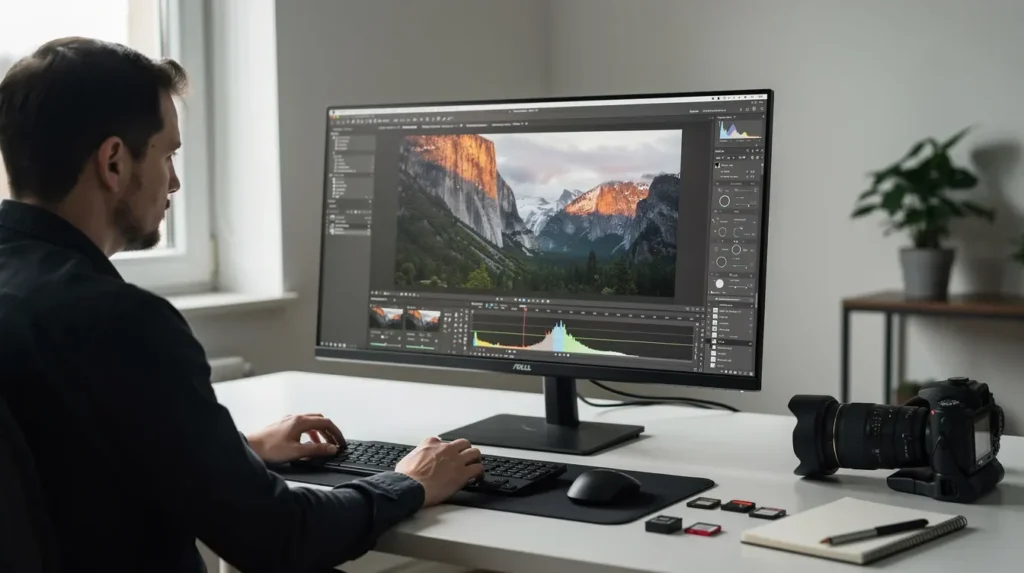
Generative Fill and Generative Upscale in Photoshop 2026
Generative fill uses Adobe’s Firefly models to add, remove objects, or extend content based on text prompts and selections. The exciting update in 2026 is that generative fill now includes multiple AI models for image generation, and you can feed a reference image to guide the output’s style, lighting, and texture rather than relying on a written description alone. This produces more accurate results when you need consistency across a series of edits.
Practical scenarios include extending a background for wider banner images, filling in missing sky detail for panoramic shots, or adding new elements like props or environmental features to a scene. Advanced generative AI models can recognize complex distractions for fast reconstruction, so removing clutter from busy compositions is faster than manual cloning.
Generative upscale is a separate step that enlarges images up to 4× resolution while maintaining high detail and texture quality. It can use partner models like Topaz Gigapixel or Bloom (similar in spirit to what you might find in topaz studio) within the Photoshop workflow. Each generation uses credits, and results sometimes need manual refinement-artifacts around fine edges, glass, or motion blur are still common. A solid internet connection helps with cloud processing speed, though GPU acceleration on your local pc handles the selection and transform tasks efficiently.
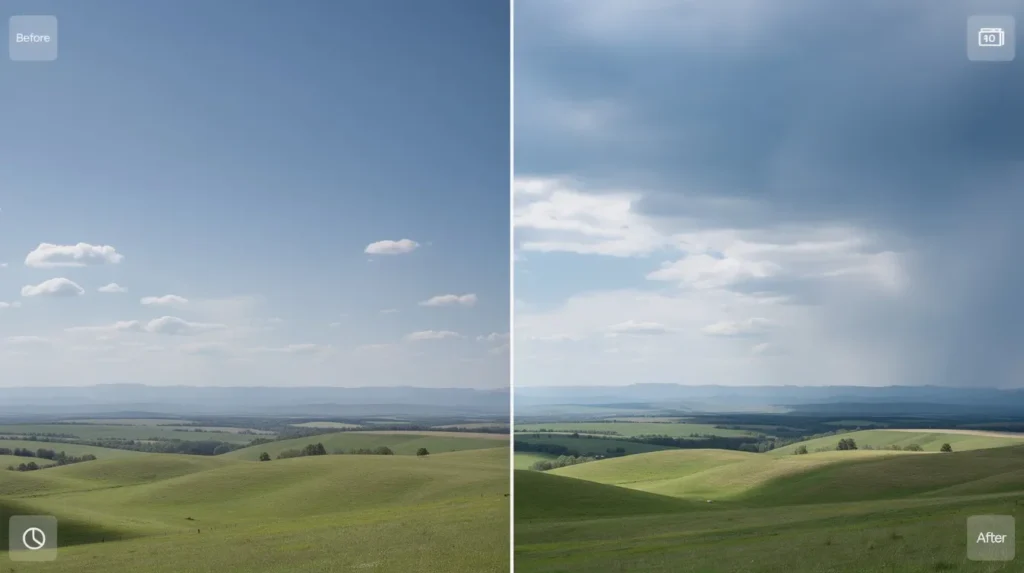
Improved Selection, Background Removal, and Compositing Tools
Selection accuracy took a meaningful step forward. The select subject and remove background commands now handle hair strands, fur, and semi-transparent edges with noticeably fewer errors, producing accurate results that previously required painstaking manual masking. The new remove tool can automatically detect and eliminate distractions from images, and it now automatically detects and removes background people-useful for cleaning up street photography or event shots.
A typical compositing workflow looks like this: select your subject, refine the mask, drop the cutout into a new background, then use the Harmonize tool, which matches color and lighting between composite layers, to blend everything convincingly. You can drag layers, adjust shadows and light, and zoom into fine detail to check edges. For e-commerce product pics or social graphics, this saves significant time.
Limitations remain. Glass objects, extreme motion blur, and highly detailed backgrounds still challenge automated tools. In those cases, manual channel-based masking and careful blending modes are not stuff you can skip. Depth-of-field mismatches between composited layers also require manual attention.
New Color, Vibrance, and Tone Controls
Photoshop 2026 features a new Color and Vibrance adjustment layer that places temperature and tint sliders directly inside the main editing environment. Previously, fixing white balance or global color casts often meant a round-trip to Adobe Camera Raw. That friction is reduced now.
The version also introduces non-destructive adjustment layers for Clarity, Dehaze, and Grain, giving you maskable control over texture and atmospheric effects. These layers integrate naturally with blend modes and masks for localized color grading-adjust only skin tones, push a cinematic teal-orange style on backgrounds, or boost vibrance selectively for social posts exports.
Performance-wise, stacking multiple non-destructive adjustment layers increases file size and RAM usage on large PSDs. If you’re working on a document with dozens of layers, expect heavier memory consumption. Keeping your project organized and merging finalized layers when safe helps manage this.
Adobe Photoshop Elements 2026 vs Full Photoshop 2026
Photoshop Elements 2026 targets a different audience than the full Creative Cloud subscription. It uses a one-time, three-year term license-no recurring subscription to cancel-and focuses on guided edits rather than deep manual control. Adobe photoshop elements lacks full CMYK support, advanced editing modes for professional print workflows, and the granular layer management found in the full program.
For family photos, quick social posts, and casual retouching, photoshop elements handles the job well. For multi-layer composites, heavy retouching, and commercial print work, full adobe photoshop remains the better fit. The choice comes down to your skills level and whether you need the depth of a professional toolset or prefer a simpler, guided approach.
What’s New in Adobe Photoshop 2026
The 2026 release adds several new features aimed at beginners. A text-prompt generative AI feature lets users type a description to create backgrounds, scenes, or props without understanding layers. Insert Object allows you to paint over an area and prompt the software to generate content. Restore Photo cleans up old prints-fixing damage, dust, and fading. The improved Remove tool helps remove objects like photobombers from family shots.
Elements also includes artistic effects, basic animation export for simple videos, and integration with free adobe express templates. However, the fine-tuning options are limited compared to the full version. You won’t find the same level of control over generative variations or advanced masking that professionals rely on.
Using Free Adobe Express Templates with Photoshop and Elements
Adobe Express templates are available for free with photoshop elements, and full Photoshop users can access them too. These templates cover posters, social media graphics, thumbnails, flyers, and basic video layouts. The workflow is straightforward: edit or restore a photo, export as JPEG or PNG, then use quick import to bring it into an Express template where you customize text, colors, and layout.
Small businesses creating quick ads, students building presentations, and creators designing YouTube covers benefit most. Some premium assets within Express require an Adobe account, and licensing terms differ from locally stored files. Express also supports simple animation and videos output-cool for TikTok or Instagram content that doesn’t need a full video editor.
Performance, Hardware, and Compatibility Considerations
Minimum RAM sits at 8 GB, but 16 GB or more is strongly recommended for heavy PSDs and generative features. GPU requirements include DirectX 12 support with at least 1.5 GB VRAM; 4 GB+ is better for 4K displays. An internal SSD with at least 10 GB free is needed to install, though 100 GB+ is practical for working projects. Mac users need recent macOS versions-Elements 2026 requires macOS 14.4 or later.
On older hardware, consider disabling AI previews, working at lower resolution, or using smaller canvas sizes. File sizes grow quickly when you create multiple generative variations and smart objects, so plan your storage and backup strategy accordingly.
Real-World Use Cases for Photoshop 2026 and Elements 2026
A freelance photographer uses generative fill to extend tight crops for magazine layouts, then applies the Harmonize tool to match composited elements. A small e-commerce shop owner relies on remove background and generative upscale to create crisp product images from phone-shot pics, exporting them as PSD and TIFF files for print catalogs.
A student content creator builds YouTube thumbnails using Express templates, pulling edited photos from Elements 2026 via quick export. A hobbyist restoring family photos uses Restore Photo in Elements to fix damage, then generative fill in full Photoshop to reconstruct missing areas. The link between these workflows is consistent: ai handles the heavy lifting, but manual review and refinement remain part of every serious project.
Limitations, Privacy, and Cloud Dependencies
Key limitations include dependence on Adobe’s cloud for generative features, credit quotas that can run out mid-project, and mixed quality on complex prompts. Some legacy plugins are missing compatibility with version 27.x and may need updates. Classic tools-brushes, layers, filters-work offline, but generative fill and neural filters degrade without internet.
Privacy-wise, images processed through cloud services are uploaded to Adobe servers. Adobe’s current policy states customer content will not be used to train generative models without express consent, but reviewing their terms periodically is wise. Always test new features on copies of important projects to avoid surprises from AI artifacts or version-specific changes. The power of these tools is real, but so are the trade-offs.
Technical Details
| Software Name | Adobe Photoshop 2026 |
| Version | 27.0 (Desktop release October 2025) |
| Developer | Adobe Systems Incorporated |
| Publisher | Adobe Inc. |
| Last Updated | October 27, 2025 |
| Initial Release Date | October 2025 (version 27.0) |
| Setup Type | Offline Installer / Full Standalone Setup (via Adobe Creative Cloud) |
| File Size | Varies by platform and included modules – typical installer stub plus modules; official size not publicly consolidated |
| Compatibility Architecture | 64 bit (x64) for Windows; macOS supported (64-bit) — see official system requirements |
| Category | Graphic Design / Digital Image Editing |
| Installation Info | Install via the Adobe Creative Cloud desktop application, sign in with your Adobe ID, then download and activate Photoshop 2026. |
| License | Subscription-based (part of Adobe Creative Cloud) |
Adobe Photoshop 2026 System Requirements
| Component | Minimum Requirement | Recommended Requirement |
|---|---|---|
| Processor (CPU) | Multicore Intel®, AMD, or Windows ARM processor. AVX2 support recommended. | Recent generation multi-core Intel/AMD or Apple silicon (for macOS) for best performance. |
| Operating System | Windows 10 (version 21H2 or later) or Windows 11. | Latest Windows 11 version recommended. |
| Memory (RAM) | 8 GB. | 16 GB or more, especially for large files/4K+ editing. |
| Graphics Card (GPU) | • GPU with DirectX 12 (feature level 12_0) support • 1.5 GB of GPU memory • GPU not older than ~7 years. | • GPU with DirectX 12 (feature level 12_0) or better • 4 GB of GPU memory (or more) for 4K displays and greater. |
| Monitor / Display Resolution | 1280 × 800 at 100% UI scaling. | 1920 × 1080 or higher recommended. |
| Hard Disk / Storage | 10 GB of available hard-disk space. | 100 GB or more free space, SSD strongly recommended; separate drive for scratch disk. |
| Internet & Activation | Internet connection, Adobe ID and registration required for activation and online services. | |
Adobe Photoshop 2026 Free Download
Click below to start the Adobe Photoshop 2026 Free Download from getintopc. This is a full offline installer standalone setup for Windows Operating System. This would be compatible with both 32 bit and 64 bit windows.
Please wait 10 seconds…
Pros and Cons
Pros
- Strong AI integration (Generative Fill + Upscale)
- Improved selection accuracy
- Non-destructive adjustment layers
- Professional workflow tools
Cons
- Requires subscription
- Cloud dependency for AI tools
- High hardware requirements
- Credit-based generative system
Conclusion: Who Should Consider Adobe Photoshop 2026 and Elements 2026?
Adobe Photoshop 2026 delivers meaningful improvements in AI-assisted compositing, generative tools, and flexible color control. For professionals who rely on complex layer work, print-ready output, and fine-grained edits, it justifies the Creative Cloud subscription. Photoshop Elements 2026 serves a different need-family photos, guided corrections, and simpler generative AI features in a one-time purchase format that doesn’t require ongoing subscription management.
Before choosing either version, honestly assess your hardware capabilities, tolerance for cloud reliance, and actual editing needs. The security risks of unofficial downloads are real, and cutting corners on licensing can cost more than the software itself. GetIntoPC aims to provide technical guidance and software information so you can make informed decisions-not pressured ones.
Frequently Asked Questions About Adobe Photoshop 2026 and Photoshop Elements 2026
Is Photoshop Elements 2026 enough for professional work?
For basic retouching, family photos, and social media content, yes. For CMYK print production, complex compositing, or advanced layer workflows, the full version is necessary.
Do I need a GPU for Generative Fill?
Generative Fill processes on Adobe’s cloud, so GPU power matters less for generation itself. However, a capable GPU improves canvas rendering, transform previews, and overall responsiveness.
Can I open old PSD files in Photoshop 2026?
Generally yes. Files using features exclusive to newer versions (like generative layers) may not render correctly in older builds, so maintain backups.
What’s the difference between Elements and full Photoshop for 2026?
Elements uses a fixed-term license with guided edits and simplified AI. Full Photoshop offers subscription-based access with deeper control, more AI model options, and professional output formats.
Can I use free Adobe Express templates with Elements?
Yes. Adobe Express templates are available for free with Photoshop Elements and can be used for social posts, posters, and basic video layouts.
What happens if I run out of generative credits?
You wait for the monthly reset, upgrade your plan, or purchase add-on credits. Credits do not carry over month to month.
Can I stay on an older version and skip the upgrade?
You can, but newer PSD features may not open correctly. Weigh whether the new features justify the transition for your workflow and tasks.
Is there an offline AI option?
An offline Remove tool (approximately 4–5 GB on-device model) works without internet or credits but requires higher hardware specs.